
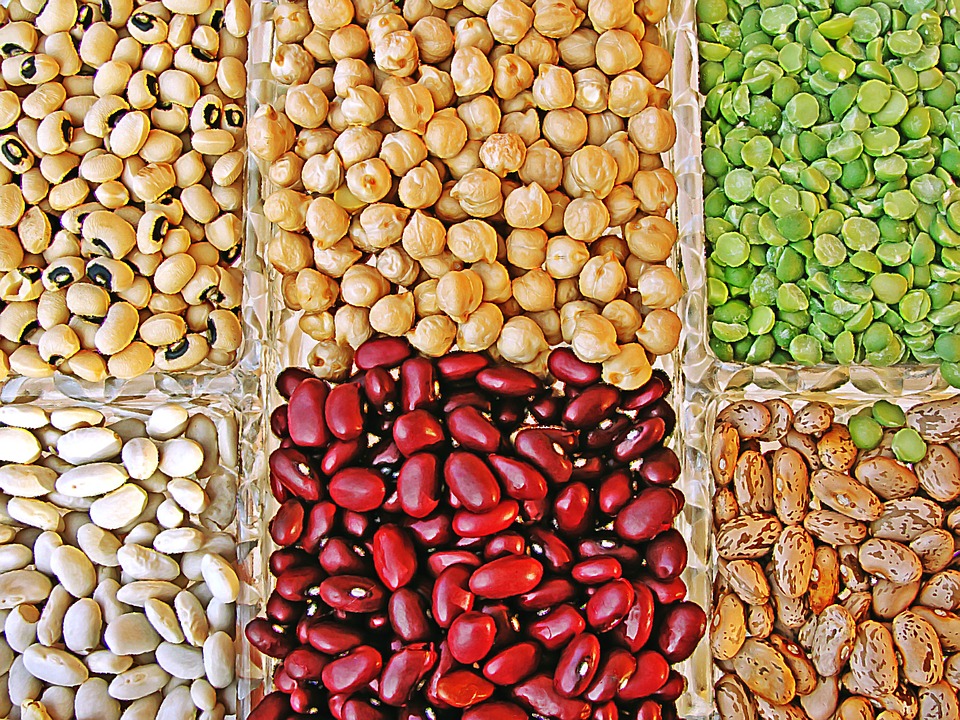
 (Photo: Pixabay). Pulses (Leguminosae) are represented worldwide with many genera and about 13000 species. With the beginning of agriculture and the domestication of cereals, pulses also became crops. The domestication took place in the Fertile Crescent about 10,000 years ago, but also in Ethiopia, India, China, Mexico and South America. Starting from 8,000 B.C. the cultivation of pulses is demonstrated with archaeological findings. The oldest findings come from Jericho. Only 2,200 B.C did the pulses get into the western Mediterranean. All pulses can produce valuable protein from atmospheric oxygen with the aid of bacteria on their roots (nitrogen fixing). The biologically bound nitrogen is in the root nodules and can be used by the plant. Thus all pulses are protein rich and grow on unfertilized soil. The symbiosis of bacteria and plant is a highly effective natural system, with can carry out a synthesis reaction (protein from atmospheric nitrogen), which otherwise can only be produced in large scale technical machinery at high energy consumption (industrial fertilizer production through the Haber-Bosch procedure).
Haricot nain: Marché de Genève
Bildtitel: Buschbohne: Marché de Genève, Bild: ProSpecieRara Titre de l'image: Haricot nain: Marché de Genève, Image: ProSpecieRara Bildtitel: Buschbohne: Marché de Genève, Bild: ProSpecieRara Titre de l'image: Haricot nain: Marché de Genève, Image: ProSpecieRara